
Ceiling Spotlights

Recessed lights are perfect for any kitchen. You can never go wrong with low-voltage recessed downlights. They serve a means of assimilating a modern kitchen with ancient lighting styles. An old-time lighting fixture can be placed over the kitchen island to offer pools of task lighting.
The Bedroom
A well-thought lighting scheme is critical to a bedroom design that’s both functional and attractive. For your bedroom to accommodate dressing, sleeping, reading, as well as relaxing, you’ll need to incorporate different forms of lighting.
Task Lighting
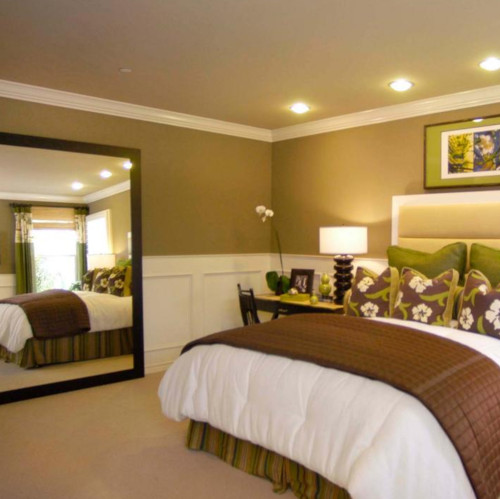
Task lighting is essential for any homeowner who intends to utilize their bedroom as a home office. Dimmable overhead and bedside lamps will cast soft, diffused light that’s perfect for reading and relaxing. For wardrobes, you can use spotlights, especially if there’s insufficient natural light in that particular space. Another way to achieve an atmospheric lighting scheme is to incorporate layers of light into your bedroom. Start by choosing a statement piece for your ceiling and then matching it with other fittings to create a symmetrical look.
Classical Chandeliers considers various types of bedroom lighting techniques, from accenting your space with spotlights to installing a classic lampshade. Bedrooms that are only utilized at night, look best when illuminated with low light. So, whilst you may use ambient, task, and accent lights, you may rarely utilize all three at a go, unlike in the living room, for instance.
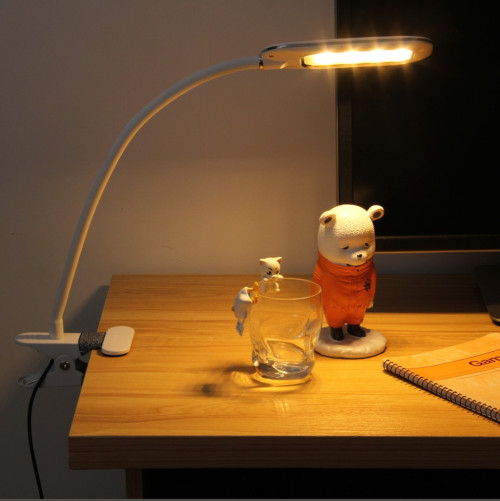
Ambient light: This substitutes natural daylight and can readily be created with wall lights, pendants, as well as table lamps. This form of lighting brightens your space while creating a relaxed atmosphere.
Task light: This mainly refers to a focused light, which may exist in the form of wardrobe lighting, a - reading lamp/bedside table, or bright ceiling downlights.
Accent light: Created using uplights, downlights, and spotlights as well as other lighting styles, accent lights are typically used to highlight design features like artwork, paintings, or alcoves.
If you’re refurbishing your home from scratch, you may want to consult a lighting designer to incorporate advanced control systems into your scheme. Remember, the lighting design should be completed before any electrics are fixed. This will ensure that the scheme is well-integrated into each room’s joinery and architecture. No bedroom lighting design will look stylish controlled by one switch. It should include at least 3 circuits: one for wall lights, one for downlights, and one for table lamps. Ideally, you should be in a position to control all the lighting from the bed or bedroom door. Perhaps, you’ll heavily rely on your bedroom’s central pendant than you’d depend on the one installed in your living room.
If your bedroom features high ceilings, a bigger chandelier or pendant shade will create an attractive focal point. Lower ceilings, on the other hand, will benefit from smaller fixtures such as downlights and ceiling lights. Spotlights are a great choice for areas that always tend to be dark, like walk-in wardrobes as well as fitted bedroom storage units.
Lampshades and Bulbs
Modern bedrooms can look great with task lights or spotlights, but adding a stylish lampshade can’t be beaten for casting a soft, diffused glow. Pick a high-quality lampshade and choose an off-white/cream color for optimal warmth. You can as well brighten a cool bedroom by installing the right light bulb.
- Tungsten bulbs cast a warm, instant light that lasts approximately 1,000 hours. Besides, they’re fully dimmable and offer great energy efficiency.
- Halogen bulbs produce bright white light and last up to 2,000 hours. They are also available in low-voltage capsule types which might necessitate the use of specialist dimmers.
- Energy-saving bulbs (compact fluorescent bulbs) produce a warm, white light which is sure to give your space a stunning glow.
- LED bulbs are classy and energy efficient. You can readily find dimmable versions, though they aren’t compatible with touch lamps.
Dimmers set the Right Mood
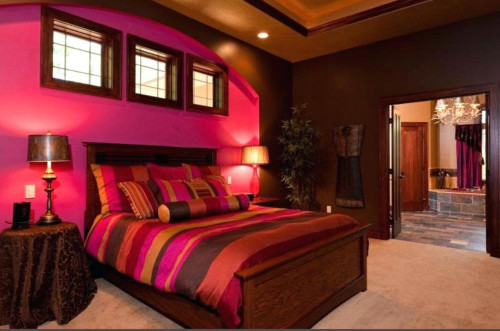
If you’re designing your home on a strict budget, dimmer switches can be the perfect option and are an incredible way for setting the right mood in any space.
There are numerous types: switch dimmers, touch dimmers, and remote dimmers. Remember, dimmers aren’t usually utilized with energy saving bulbs; however, the dimming itself often saves energy. It’s possible to dim halogen bulbs but they might need a high wattage dimmer.
If you experience flickering and overheating when using LED Lamps for dimming, it could mean that the lamp isn’t dimmable or incompatible with your switch.
If you’re working on a limited budget, you might get tempted to install lighting fixtures on your own, but you’ll have to observe your country’s building regulations. Alternatively, you can hire a professional designer to help you out.
Childrens Room
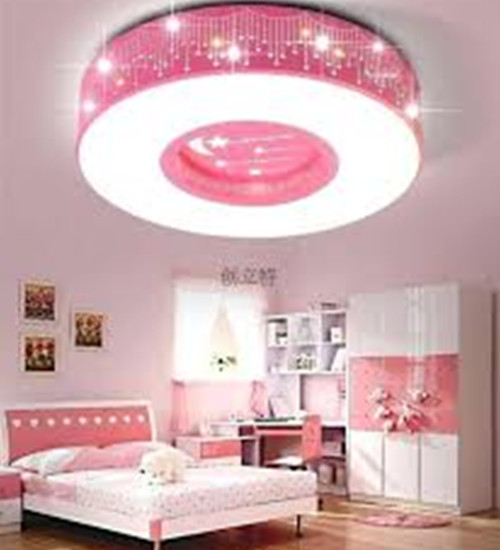
As compared to opposed to adults, children need cooler lighting schemes. In this case, safety takes center stage. Also, it’s important to note that the lighting design you opt for should change as your children get older. There are lots of decorative lights focused on children, from rotating carousels to airplanes.
For babies, you’ll need to install low-level lighting so that you can monitor them at night, feed, change, as well as comfort. Try a small lamp featuring a low-wattage bulb (12V maximum) or a plug-in nightlight.
- Use wall-mounted lights instead of freestanding lamps
- Installing dimmers will work like magic- they prepare your child mentally for bedtime
- Don’t let your child watch television in total darkness. Rather, you should install low-level light from a dimmed light or a table lamp
Quality of illumination: Factors to Consider
Color Rendition
The ability to perceive colors correctly is another essential component of lighting quality. The CRI (color rendering index) scale is often used for comparing a light source’s effect on the appearance of its surrounding. A higher CRI implies minimal color shift. Anything between 75 and 100 is considered excellent, whereas 65-75 is good.
Commercial, industrial, as retail facilities utilize various light sources. Every lamp type offers particular advantages; picking the right source depends on dimming capability, life-cycle cost, installation requirements, and the desired effect. Common types of lamps include incandescent, metal halide, fluorescent, mercury vapor, low/high-pressure sodium, and high-intensity discharge.
Glare
When it comes to lighting quality, glare is one of the most important factors to take into consideration. Glare refers to a sensation triggered by luminances in a visual field that’s too bright. Annoyance, irritability, and reduced productivity may occur.
Bright objects don’t necessarily cause glare, but when placed in front of dark backgrounds, they usually cause glare. Glare and luminance ratios can be reduced by maintaining standard light levels and using lighting equipment designed specifically to minimize glare.
Uniformity of the Illuminance on Tasks
This is a quality issue which addresses the evenness of light over a particular task area. Though a room might feature the right average illuminance, two aspects may compromise uniformity; inappropriate fixture placement and fixtures which are retrofit with reflectors.