
Lighting Schemes

Lighting is essential for every home. It creates the right ambiance and mood but doesn’t necessarily mean that you spend junks of money on designer light fixtures. While you might want to incorporate complex designs, the key to adding illumination is the quality of the light source and how it’s being utilized.
A good lighting design provides quality lighting from different directions and locations. The lighting source doesn’t just brighten your space but also provides the overall sense of balance as well as completion.
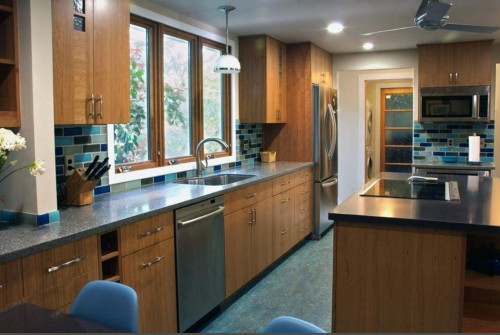
Kitchen Lighting Schemes
It’s important to always remember that lighting fixtures don’t just provide illumination and ambiance, they also play an important role in differentiating zones and accentuating design details.
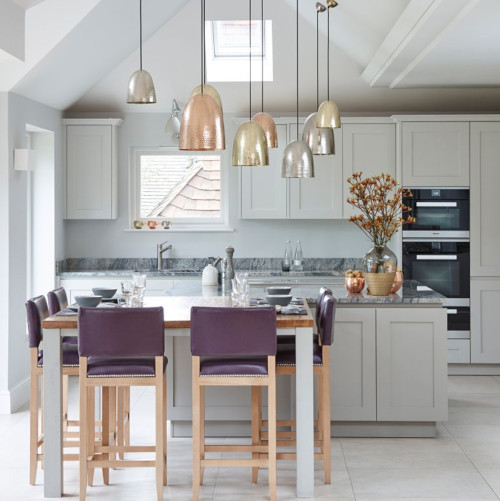
Contrast and the Right Combo
Adding contrast is an incredible way to create a dramatic effect in your interior space. Layering, which entails mixing different types of fixtures, can help you achieve a stylish and comfortable space. You may want to consider placing task lighting above the sink and cooking area, where more work is done regularly.
You can then include a decorative candelabra-style lighting fixture in your dining room to provide adequate ambient light for meals. Craftsman-style pendant lights offer sufficient lighting for eating and food preparation at the island. A couple of recessed fixtures bring additional task lighting whenever necessary, and large windows let in enough sunshine.


Undercabinet fixtures, on the other hand, brighten shadowy counter surfaces, making them more attractive and easier to access. There are three types of undercabinet illumination- strip and mini-track, as well as a puck. Linear shaped bulbs provide plenty of evenly diffused task lighting. Puck and disc lights are perfect for brightening up your kitchen countertops. The easy-to-install track systems comprise of miniature low-voltage xenon or halogen bulbs that can be customized to meet your personal preferences.
Set the Mood
The only sure way to set the right vibe for your kitchen is to install the perfect lighting scheme. Integrating natural- including rectangular windows, glass doors, plus small skylights- with stylish undercabinet puck fixtures provides comfortable ambient illumination in any space. For task lighting, you can install extra lights between your skylights. Don’t forget to include matching fixtures as they really add more class. Wall sconces accentuate dull wall, making them the focal point of any room.
Also, when doing your interior design, ensure that the lighting scheme provides:
- Adequate illumination
- Uniform light distribution
- Light of suitable color
Plus, make sure that the lighting scheme doesn’t lead to glares or hard shadows.
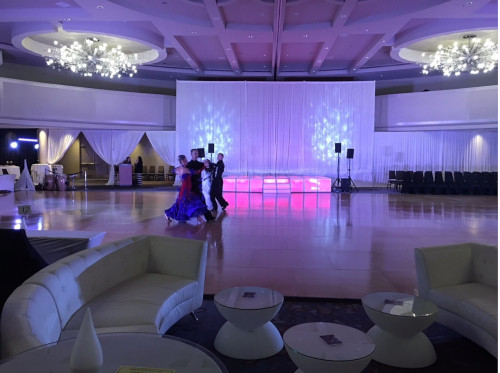

Illumination Level & Layering
When designing your lighting scheme, it’s wise to consider the illumination level. Illumination level is a vital factor when it comes to lighting schemes. With the right illumination level, you are able to see your surroundings. For instance, task lighting illuminates objects—giving them distributed brightness. As per the ISI, the following are the illumination levels for various interior spaces.
Creating Your Lighting Layers
If you are looking to create lighting layers—from ambient, accent, as well as task—think how to balance the layers for an overall look. Also, you can think in terms of flexible but classy combinations of light for different moods and uses. This can only be possible with the use of dimmers.
Although such a place requires more task lighting to help you with cooking, you can also go creative and go for soft ambient as well as accent lighting—especially when it comes to entertaining your guests. Also, you can decide to go creative with your living room, bathroom, and bedroom.
The power of a control device
You have determined the types of lights to layer and installed different lamps. It will be wise to buy a good control device. Invest in a centrally control device to help you with switching and dimming. Plus, you can consider investing in systems that can be pre-set as ‘scenes’. This will help you activate them with a push of the button.
Design the Bedroom Lighting Like a Pro
A well-thought lighting scheme is critical to an interior design that’s both functional and attractive. Most bedrooms need a combination of various lighting types in order to accommodate activities such as dressing, relaxing, and reading without overpowering the space with harsh light. If you’d love to use your bedroom for studying, you may want to install task lighting. Dimmable overhead/bedside lamps will play a significant role in filling your room with soft, diffused light. Wardrobes will benefit greatly from spotlights, particularly in larger rooms with inadequate natural light.
One of the most effective ways to create an elegant lighting scheme is to utilize layered lighting. Start with your ceilings and choose statement pieces. You should know exactly how to mix different forms of lighting to achieve the perfect lighting design scheme.
The Best Lights for the Bedroom
Bedrooms, commonly utilized at night, look their best when illuminated with low light. Thus, while you might rely on ambient, task, as well as accent lighting-you might rarely make use of all the three at once. When designing your home’s lighting scheme, consider the volume of natural light coming in. Then take into account your personal needs and habits.
No lighting scheme will look great controlled by a single switch. Consider utilizing various circuits for your bedroom lighting. Generally, an average bedroom will need a minimum of two circuits: one for controlling the downlights/central pendant and the other for wall lights or table lamps. Ideally, you should be able to control your home’s entire lighting from the bedroom door or bed.
Choose a Central Pendant
Unlike for your bedroom, the living room won’t rely so much on the central pendant to stay cool and well-lit. If your space features high ceilings, you may want to a bigger chandelier or pendant shade. This will create an elegant focal point, particularly in traditional bedrooms. For lower ceilings, consider using smaller fittings like downlights and ceiling lights.
Sort the Bedside Lighting
Love to use your bedroom for reading or need to brighten up your study room? Well, bedside table lamps are the best option for you. However, wall lights could also create a cool atmosphere that’s perfect for both reading and relaxing.
Discrete reading spotlights can be mounted on the wall or fixed directly to the headboard and controlled by a dimmer switch. Alternatively, you could install dropped pendants or a grouping of pendants. To achieve a stylish hotel look, arrange these in odd numbers and different sizes for the best effect.
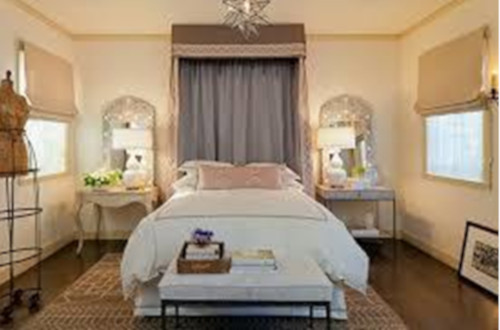
Dark Corners? Accent them with Spotlights
For areas that often feel dark, spotlights are an incredible option. They work best when installed in places like wardrobes and bedroom storage units. For instance, if there’s a freestanding wardrobe in your room, you can fit in a clip-on/freestanding spotlight. Walk-in wardrobes will need professional lighting installation. Most furniture companies will install the lighting for you if you purchase their products.
Diffuse and Warmth light With the Right Lampshades & Bulbs
Modern bedrooms can look incredible with task lights plus spotlights, but an elegant lamp shade can’t be beaten for casting a soft, diffused glow. Choose a high-quality lampshade and pick a cream/white color for maximum warmth. You could also opt for LED bulbs, which last over 20,000 hours and produce warm, white light.
If you’re designing your interior space on a restricted budget, dimmer switches can be the perfect option for you. They’re affordable and allow you to change the mood of your room. There are numerous types; switch dimmers, touch dimmers, as well as remote dimmers. Remember, dimmers aren’t compatible with energy-saving bulbs, however, the dimming itself will often save energy. It’s possible to dim halogen bulbs but they might need higher wattage dimmers.
If you purchase an LED lamp for dimming, you better be keen as you may experience tripping or overheating. This could indicate that the lamp isn’t dimmable or the dimmer is designed to dim lamps from certain manufacturers. Make sure that the bulb you choose is fully compatible with your switch.